Solar pulse
LoadingMost recent flare activity
 Main site
NOAA SWPC + live alerts
Flares, alerts, geomagnetic forecasts, and current solar wind are lined up into one readable stream.
Solar pulse
LoadingMost recent flare activity
Storm driver
LoadingLatest geomagnetic outlook from NOAA
Solar watch
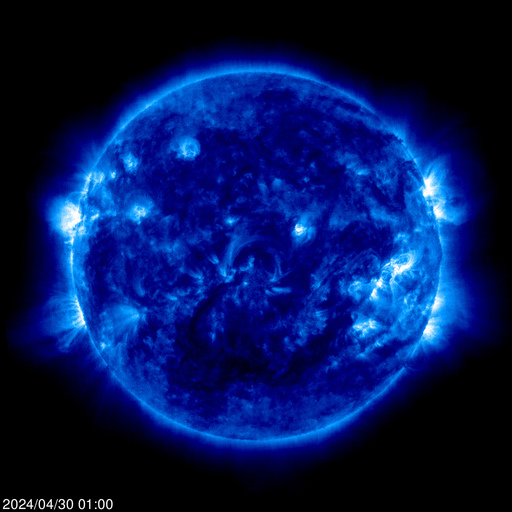
Most recent flare activity.
Latest geomagnetic outlook from NOAA.
Current NOAA alerts.
Geomagnetic calmness
North-south magnetic direction
Solar wind speed
NOAA forecast summary
Radio blackouts
Space weather impacts radio communication in a number of ways. At frequencies in the 1 to 30 mega Hertz range (known as “High Frequency” or HF radio), the changes in ionospheric density and structure modify the transmission path and even block transmission of HF radio signals completely. These frequencies are used by amateur (ham) radio operators and many industries such as commercial airlines. They are also used by a number of government agencies such as the Federal Emergency Management Agency and the Department of Defense.
There are several types of space weather that can impact HF radio communication. In a typical sequence of space weather storms, the first impacts are felt during the solar flare itself. The solar x-rays from the sun penetrate to the bottom of the ionosphere (to around 80 km). There the x-ray photons ionize the atmosphere and create an enhancement of the D layer of the ionosphere. This enhanced D-layer acts both as a reflector of radio waves at some frequencies and an absorber of waves at other frequencies. The Radio Blackout associated with solar flares occurs on the dayside region of Earth and is most intense when the sun is directly overhead.
View NOAA D-RAP details
NOAA 3-day forecast summary with the actual outlook.
Negative Bz often helps the solar wind couple with Earth.